Contactless vital-sign monitoring system
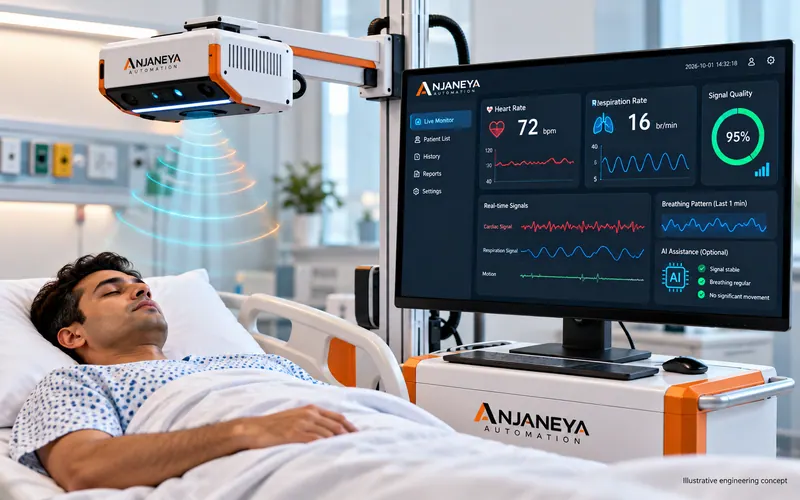
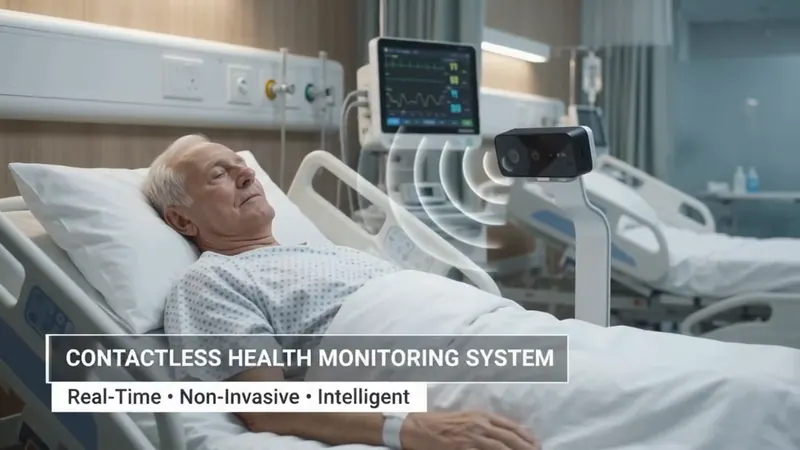
A 60 GHz radar and a thermal camera measure heart rate, breathing and temperature without touching the patient: no ECG leads, finger clip or cuff. Live readings and waveforms appear on a touch-screen display.
The challenge
Hospital staff need heart rate, breathing and temperature at a glance, without wiring sensors to every patient or reading values off several devices. Leads, finger clips and cuffs are also uncomfortable over a long stay.
What we built
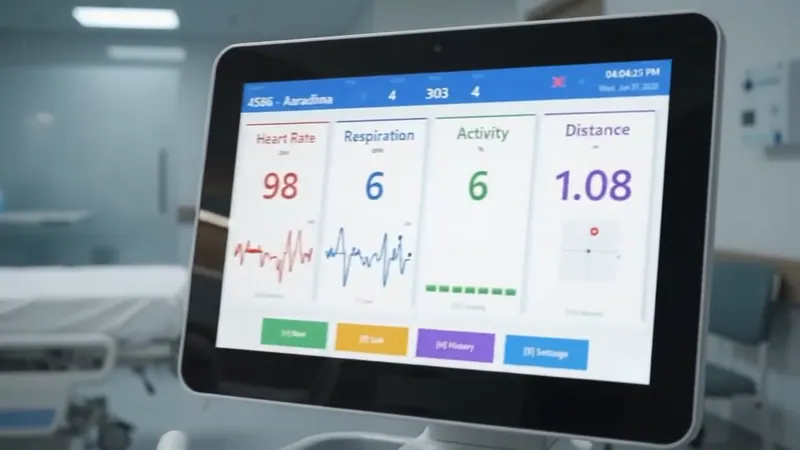
An ESP32-C6 sensor node with an MR60BHA2 mmWave radar and an MLX90640 thermal camera streams readings over BLE to a Raspberry Pi with a 7-inch touch screen. The kiosk stores data in InfluxDB, draws live breathing and heart waveforms and keeps patient records, and it boots straight into the app with no Raspberry Pi branding.
Engineering highlights
- Presence detection with two-stage checks and hysteresis, so passers-by don't trigger readings
- BLE watchdog that reconnects automatically if data stops for about 10 seconds
- Activity index from sensor fusion of Doppler, position, heart and breathing rate
- Touch-first interface: large targets, on-screen keyboard and inline validation
What comes next
Patient identification with BLE wristbands, and a production enclosure.
Vital signs without touching the patient
A radar and a thermal camera take the place of leads, clips and cuffs. The sensor node combines their readings, and the display shows them live.
60 GHz mmWave radar
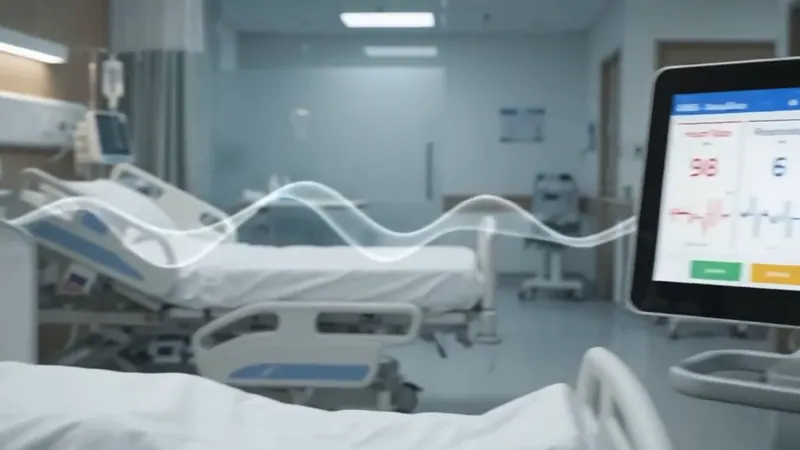
Picks up the tiny chest movements of breathing and heartbeat, without contact.
Thermal camera
Reads temperature from a distance.
Sensor node
An ESP32-C6 combines the readings, checks that someone is really there and works out an activity index.
BLE link
Readings stream to the display over BLE, with a watchdog that reconnects if data stops.
Live waveforms and records
Heart and breathing waveforms drawn live, readings stored in InfluxDB and patient records kept on the display.
More work
All work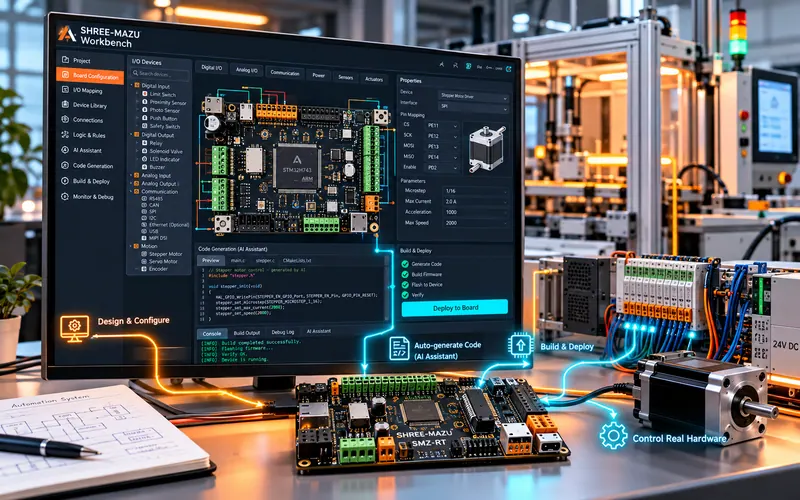 AI inside
Shree-Mazu Workbench: AI-assisted industrial engineering platform
Configure devices visually, define automation logic, generate embedded code and deploy to custom control hardware. A local AI assistant turns plain-English requests into rules.
Read the case study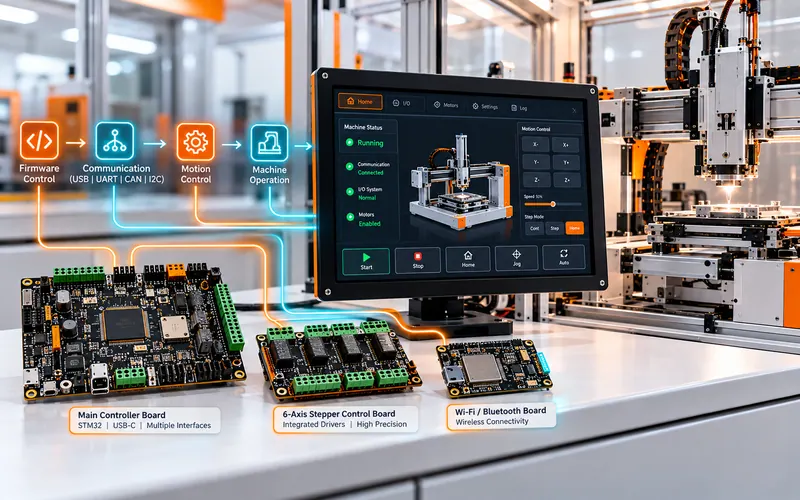
Modular industrial touch panel and control platform
Custom hardware, firmware, communication, motion control and HMI integrated into one machine-control ecosystem, from our STM32 main controller to the touch panel the operator uses.
Read the case study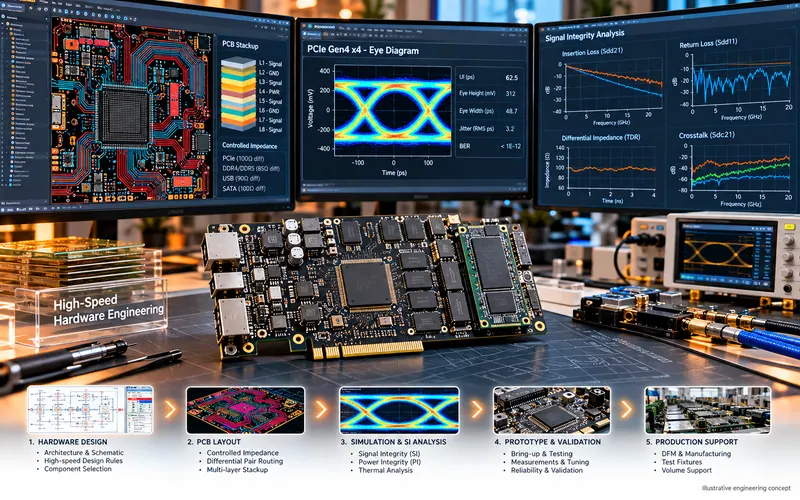
High-speed digital hardware engineering
Complex DDR, SSD/NVMe and PCIe-class board design with signal-integrity analysis and validation reporting. Our own RAM module, SSDs, an AI card and a single-board computer, on 4 to 12 layers.
Read the case studyHave an idea, a product or a machine to improve?
Tell us what you want to build or the machine you want to modernize. We reply within 24 hours on working days. We sign an NDA before you share details.